
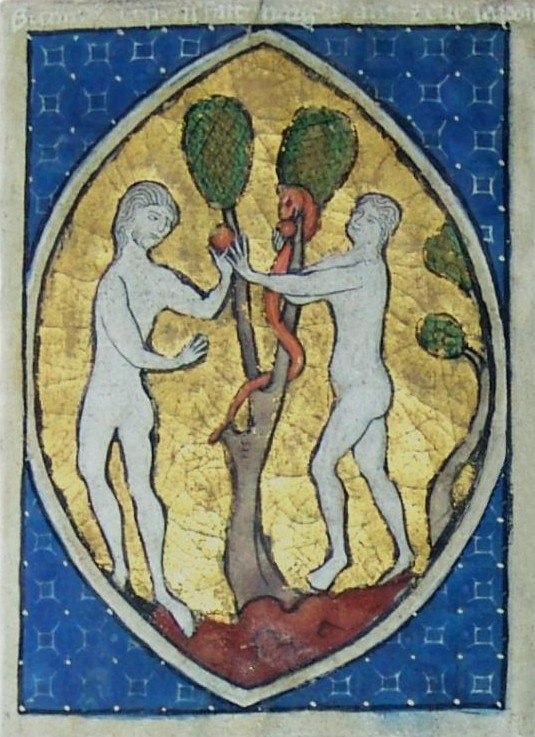
Secrets and Discovery in the Middle Ages
5th European Congress of Medieval Studies
Secret et découverte au Moyen Âge V.e Congrès Européen d’Études Médiévales
Segredo e descoberta na Idade Média Vº Congresso Europeu de Estudos Medievais
25-29.06.2013 Porto (Portugal), Faculdade de Letras
FIDEM Congress 2013
The 5th European Congress of Medieval Studies of the Fédération Internationale des Instituts d’Études Médiévales (FIDEM) is organized by the Gabinete de Filosofia Medieval, Universidade do Porto, Portugal.
FOCUS
Fascination with secrets traverses the Middle Ages. A secret is shared by few and coveted by many, requiring a lot of those who have to keep it, or those who want to disclose it. A secret is power, hence the eagerness to discover it. But as curiosity can lead to the abyss and punishment, discovering secrets also requires prudence and caution. The relationship between secret and discovery expresses itself in the Middle Ages, as in all times, through many other dynamic dualities: mystery and revelation, arcane and evidence, unknown and sought, ignorance and knowledge, esoteric and exoteric, private message and edict, hidden and manifest, conspiracy and complaint. The secret is in the nature, which does everything to hide itself, while he reveals itself in many ways, but only to those who know how to interpret it. So in the Middle Ages there are sciences for all secrets: of God, of elements and things, of the stars, of physiognomy, of women, of happiness, of the delights of paradise, of relics, of holiness, of the inner life, of sin, of power, of distant peoples and lost places, and of countless other things. The secret is itself a big secret. The secret is everywhere, in the narratives of search and discovery, in public or private action, in sciences, in books or encyclopedias. One of the most popular medieval texts, the Secretum secretorum, which collects the secrets of health, politics, nature, astrology, magic, alchemy, becomes a model for the many of the literary works composed to uncover secrets, that thus, paradoxically, cease to be. The secret holds dangerous and valuable knowledge ranging from counterfeiting, to the illusions of the imagination, or the triumph of reason and wisdom. The secret and its avatars were a silent yet strong driving force in almost all aspects of the Middle Ages. The “Secrets and Discovery” Congress proposes to discuss their presence and importance in the imagination, culture, thinking, sciences, politics, religion, and life during the Middle Ages (from the beginning of the 6th to the end of the 15th century).
Congress Sessions
are designed to promote discussion on secrets and discovery from all Medieval Studies domains, in every medieval language, and in different subjects:
- Confession and Intimacy
- Conspiracy and Betrayal
- Government and Diplomacy
- Health and Life
- Hermeticism and Transmutation
- Holiness and Relics
- Knowledge and Scepticism
- Mysticisms and Kabbalah
- Nature and Supernatural
- Past and Future
- Planets and Harmony
- Prophecy and Divination
- Sermons and Preaching
- Symbols and Dreams
- Truth and Fake
- Unknown Worlds and Lost Places
- Warfare and Strategy
Keynote speakers
- Catarina Belo (American University in Cairo), Theories of Prophecy and the Faculties of the Soul in Medieval Islamic Philosophy
- Enrique Montero Cartelle (Universidad de Valladolid), El descubrimiento de una falsedad: El De stomacho de Constantino el Africano y su fuente árabe
- Greti Dinkova-Brunn (Pontifical Institute of Medieval Studies, Toronto), The Secrets in Miscellanies: Manuscript Cotton Titus D. XX and its Structure
- Harvey Hames (Ben Gurion University, Beersheva), Discovering the Secrets of God: Kabbalah as an alternative Theology of Judaism in the Thirteenth Century
- Luís Miguel Duarte (Universidade do Porto), Secrets and Portuguese Geographical Discoveries
- Pascale Bourgain (École des Chartes, Paris), “Non sine Mysterio”
- Pete Biller (The University of York), Medieval heretics: secrets, secrecy and the Secretum

Call for papers
The congress is open to all individual members of FIDEM and to all affiliates of institutional effective members of FIDEM.
All European languages are official languages of the Congress, as is the tradition in FIDEM meetings.
Presentations
20 minutes + 10 minutes discussion.
Special sessions
If you want to organize a special session (up to 3 presentations each one), a round table, a project presentation, or books discussion or presentation, please send us a proposal.
Online registration and submission of abstracts
Registration at basic rate closes 28th February 2013. For registration after 28th February add + 30% (with paper ony until 31st March); in April to June + 50%.
- € 50 (with paper); € 70 (without paper); € 25 (students with paper); € 30 (students without paper).
- Congress Banquet (28th June): € 30 (for payments after 31 March add 25%).
- One day study visits (27th June): tba
Electronic Payment only. If you are experiencing any dificulty with online payment, please email us following our online form.
Online Submissions
Participation scholarships
FIDEM will provide scholarships for young participants (under 35) presenting their research, if they are individual members or belong to a member institution of FIDEM, in order to encourage their participation in the Congress. Application letter (accompanied by curriculum vitae and a letter of recommendation signed by a faculty member) must be sent by e-mail, after online registration in the Congress (see above), by 28th February 2013. They should be sent to Prof. José Meirinhos, secretary of FIDEM, at fidem@letras.up.pt. Candidates will be notified of the outcome on 31 March. No application will be accepted without previous complete registration, including an abstract.
Congress Facilities
Venue
Faculdade de Letras da Universidade do Porto / Via Panorâmica sn / 4150-564 Porto / Portugal.
Cafeteria
The campus cafeteria will be open to all participants for lunch and dinner at very reasonable prices (€ 3.50, 2012 price).
Other Facilities
Facilities available to the participants include: eduroam wireless network, meeting room projectors, computer’s room, Library, photocopier, etc.
Book Fair
A book fair will be open for the period of the congress, featuring the major publishers in all fields of Medieval Studies.
Accomodation
Information on accommodation is provided on the Congress website. Hotel prices are reasonable, but it is advisable to book accommodation in advance. To be done directly by participants.
Visits
One day study visits on Medieval subjects will be organized for Saturday 27 June. You can book and pay for whichever you prefer at the Congress: 1) Medieval Braga-Guimarães; 2) Renaissance and Baroque Coimbra; 3) Medieval Porto and Douro River.
Proceedings
After double blind review, the Congress proceedings will be published in FIDEM’s series ‘Textes et études du Moyen Âge’, distributed by Brepols Publishers.
Latest FIDEM Congresses
-

2023 FIDEM Congress: The Medieval Book Through the Lens of the Librarian – 7th European Congress of Medieval Studies
-
2018 FIDEM Congress: Past and Future: Medieval Studies Today – 6th European Congress of Medieval Studies
-
2013 FIDEM Congress: Secrets and Discovery in the Middle Ages – 5th European Congress of Medieval Studies
-
2009 FIDEM Congress: Coesistenza e Cooperazione nel Medioevo – 4th European Congress of Medieval Studies
-
2003 FIDEM Congress: Frontiers in the Middle Ages – 3rd European Congress of Medieval Studies
-
1999 FIDEM Congress: Bilan et perspectives des études médiévales en Europe (1993-1998) – 2nd European Congress of Medieval Studies
-
1993 FIDEM Congress: Bilan et perspectives des études médiévales en Europe – 1st European Congress of Medieval Studies